



Why are we considering a 4-day school week?
Financial Pressures
Like many districts, we are facing increasing costs in areas such as:
Substitute coverage
Transportation (fuel, driver shortages, maintenance)
Utilities
Operational expenses
A 4-day structure may help reduce:
Substitute costs (fewer school days requiring coverage)
Transportation runs
Utility usage
Some operational expenses
Wear and tear on facilities and bus/vehicles
This is not a financial cure-all, but it may create operational efficiencies that help us preserve classroom programs.
Recruitment & Retention
Recruiting and retaining high-quality staff is increasingly competitive.
Neighboring districts — including Pe Ell — have moved to a 4-day week and report positive results.
Many educators actively seek districts with flexible calendars.
Retention improves when staff morale and work-life balance improve.
4-day week may allow more time for staff appointments leading to reduced absences
Community Interest
There has been expressed interest from segments of our staff and community in exploring this model.
This process is about:
Listening
Providing information
Evaluating impacts carefully
Making an informed decision together
Better for Kids?
Supporters of 4-day weeks are often seeking:
Longer, uninterrupted instructional blocks
Fewer weekly transitions
Reduced burnout
Improved attendance
Flexibility for appointments without missing class time
The question we are asking is:
Can we deliver the same, or better, educational outcomes in a different structure?
What this would look like here...
To prevent confusion, clarity is important.
Minimal change to overall instructional seat time
State-required instructional minutes would still be met
School days would be slightly longer
Wednesdays would change to full instructional days
The week would shift to four full instructional days
One "enrichment day" per month would be added for students to receive additional help.
It is not a reduction in learning minutes, just a restructuring.
Myth vs. Fact
Myth #1: This means students will get less education.
Fact:
Students would still meet state-required instructional minutes. The total yearly seat time would remain nearly the same, with slightly longer school days to maintain required hours. We would also have one day a month earmarked for Enrichment, to offer more individualized help to students struggling.
This proposal is about restructuring time, not reducing learning.
Myth #2: This is just a cost-cutting move.
Fact:
Financial sustainability is one reason we are exploring this option. A 4-day week may reduce substitute costs, transportation expenses, and utilities.
However, this is not a financial “fix-all.” Recruitment, retention, and long-term sustainability are also major considerations.
Myth #3: Teachers would lose planning and professional development time?
Fact:
Staff contracts and responsibilities would still meet state and district requirements. Many 4-day districts structure schedules to include planning, collaboration, or professional development time.
This is not about reducing professional expectations.
Myth #4: Students will fall behind academically.
Fact:
Research nationally is mixed. Academic outcomes depend far more on instructional quality and support systems than on the number of days in a week.
Districts like Pe Ell have reported positive experiences under a 4-day model. If implemented, student performance data would be closely monitored.
Myth #5: Wednesdays would remain early release days.
Fact:
Wednesdays would change to full instructional days. The goal is minimal change to overall seat time while shifting to four slightly longer days.
Myth #6: This will save huge amounts of money.
Fact:
Savings are typically modest but meaningful. Districts often see reductions in:
Substitute costs
Transportation costs
Fuel and utility usage
It is one strategy among several to operate responsibly while protecting student programs.
Myth #7: Working families won’t be considered.
Fact:
Childcare and family schedules are a top consideration. Community input, surveys, and partnership exploration would be part of any decision-making process.
No final decision would be made without evaluating family impact.
Myth #8: Extracurricular activities will disappear.
Fact:
Athletics, clubs, and activities typically continue under a 4-day model. Competitions and practices often still occur on the non-student day, just as they do now on weekends.
Myth #9: This lowers expectations for students.
Fact:
Academic standards, graduation requirements, and expectations would not change. This is a calendar structure discussion — not a reduction in rigor or expectations.
Myth #10: The decision has already been made.
Fact:
No decision has been finalized. This process is about gathering information, listening to the community, and carefully evaluating impacts before any action is taken.
What This Conversation Is Really About?
Financial responsibility
Recruitment and retention of quality staff
Community input
Maintaining strong educational outcomes
Exploring whether a different structure can serve students well
This is not about doing less. It is about examining whether we can do the same, or better, in a different way.
Frequently Asked Questions
Q: Are we cutting learning time?
No. We would still meet or exceed required annual instructional minutes. Students would attend slightly longer days to maintain total seat time.
Q: Is this just about money?
Financial sustainability is one factor. However, recruitment, retention, and overall student and family experience are equally important considerations.
Q: Will this save a lot of money?
Savings are typically modest, but meaningful. Most districts see reductions in:
Substitute costs
Transportation costs
Utilities
It is one strategy among several to remain financially responsible while protecting student programs.
Q: Will students be in school fewer hours?
Total annual instructional time would remain nearly the same. The schedule shifts, it does not shrink. Wednesdays would become full days.
Q: What about academic performance?
Research is mixed nationally. Outcomes largely depend on:
Quality of instruction
How the schedule is structured
Use of instructional time
Intervention supports
Districts like Pe Ell report positive experiences under a 4-day model.
Q: How would this impact staff?
May improve recruitment and retention
Reduce burnout
Allows additional day for appointments, leading to staff absence reduction
May provide more flexibility for professional planning and collaboration
Details would be negotiated and structured carefully to avoid unintended impacts.
Q: What about childcare?
This is a significant consideration. Before any implementation:
We are surveying stakeholders
Exploring community partnerships
Evaluating possible solutions
Community input is critical.
Q: We just passed a levy, now you are cutting days. Do you not need the levy dollars?
In the first two failed levy attempts, our voters would not support the higher levy dollar amount that was needed to maintain programs and staffing levels. In our most recent levy attempts we heard and honored our voters. We reduced the levy ask and committed to seeking more ways to operate more efficiently while maintaining programs and increasing positive student outcomes. Exploring a 4 day school week is on way in which we are continuing that commitment.
What this is not:
Not a reduction in educational expectations
Not eliminating instructional rigor
Not a short school week in terms of minutes
Not a decision that’s already been made
Attendance Trends
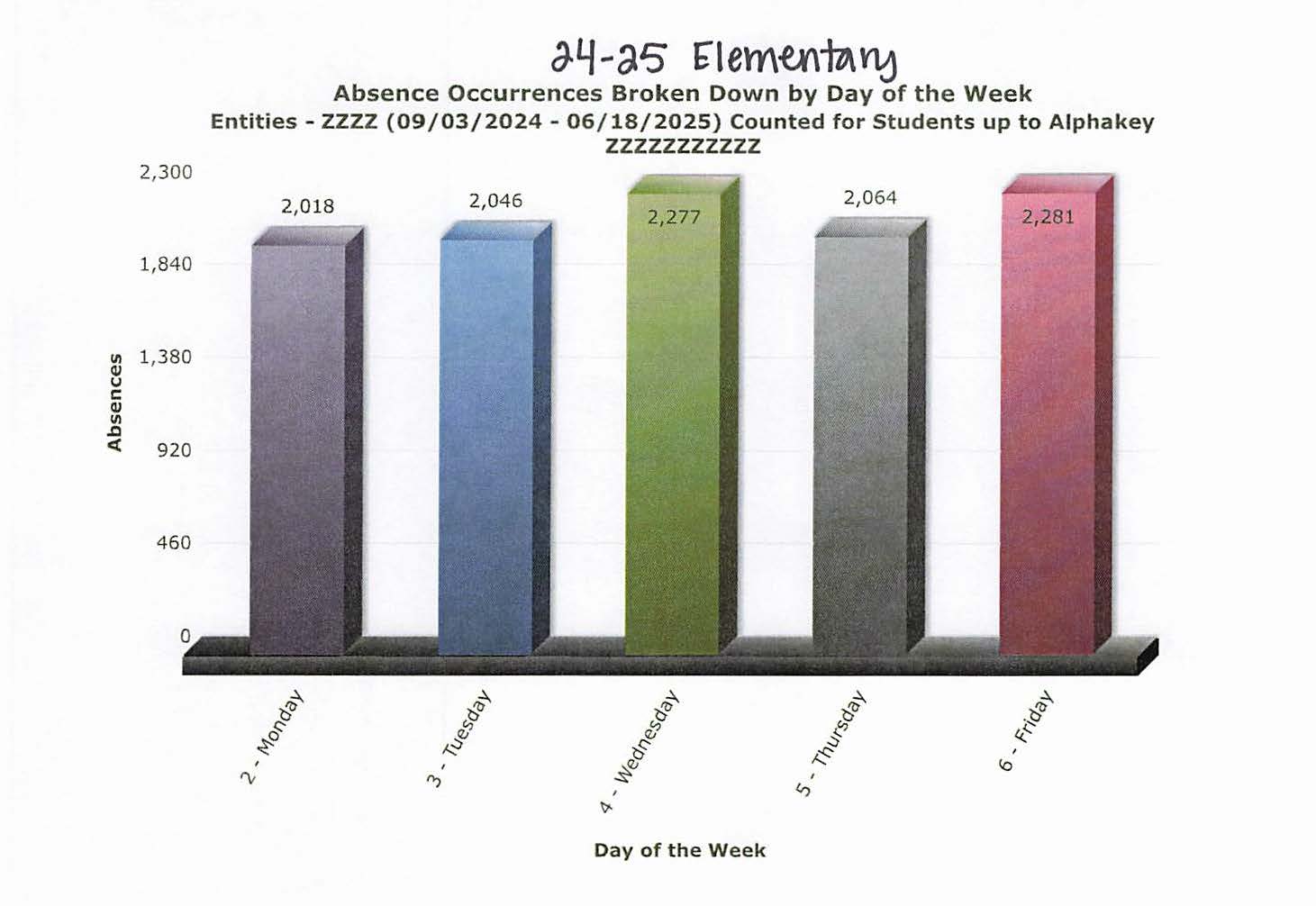
2024-2025 Elementary School Student Absence Graph
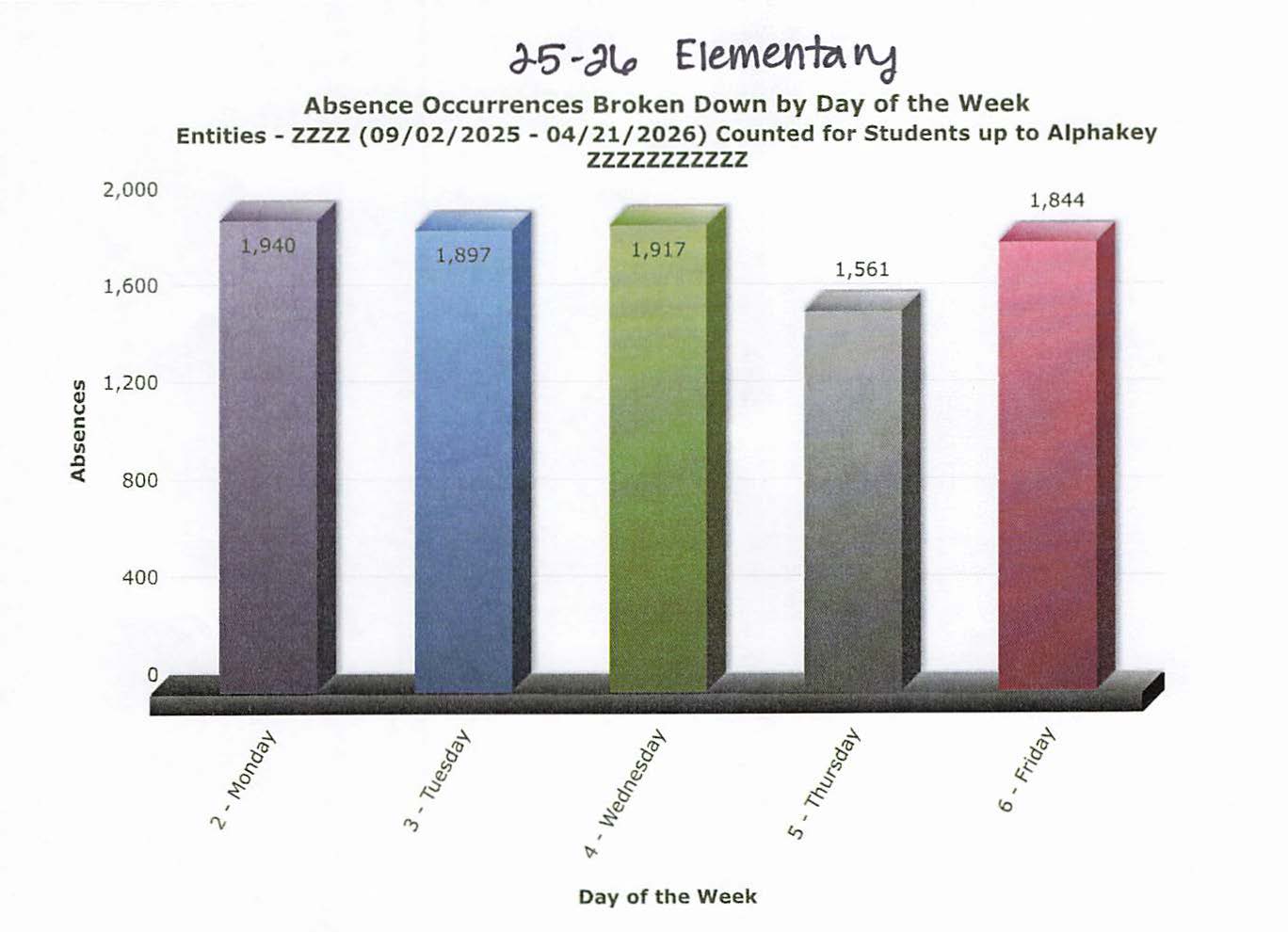
2024-2025 Elementary School Student Absence Graph
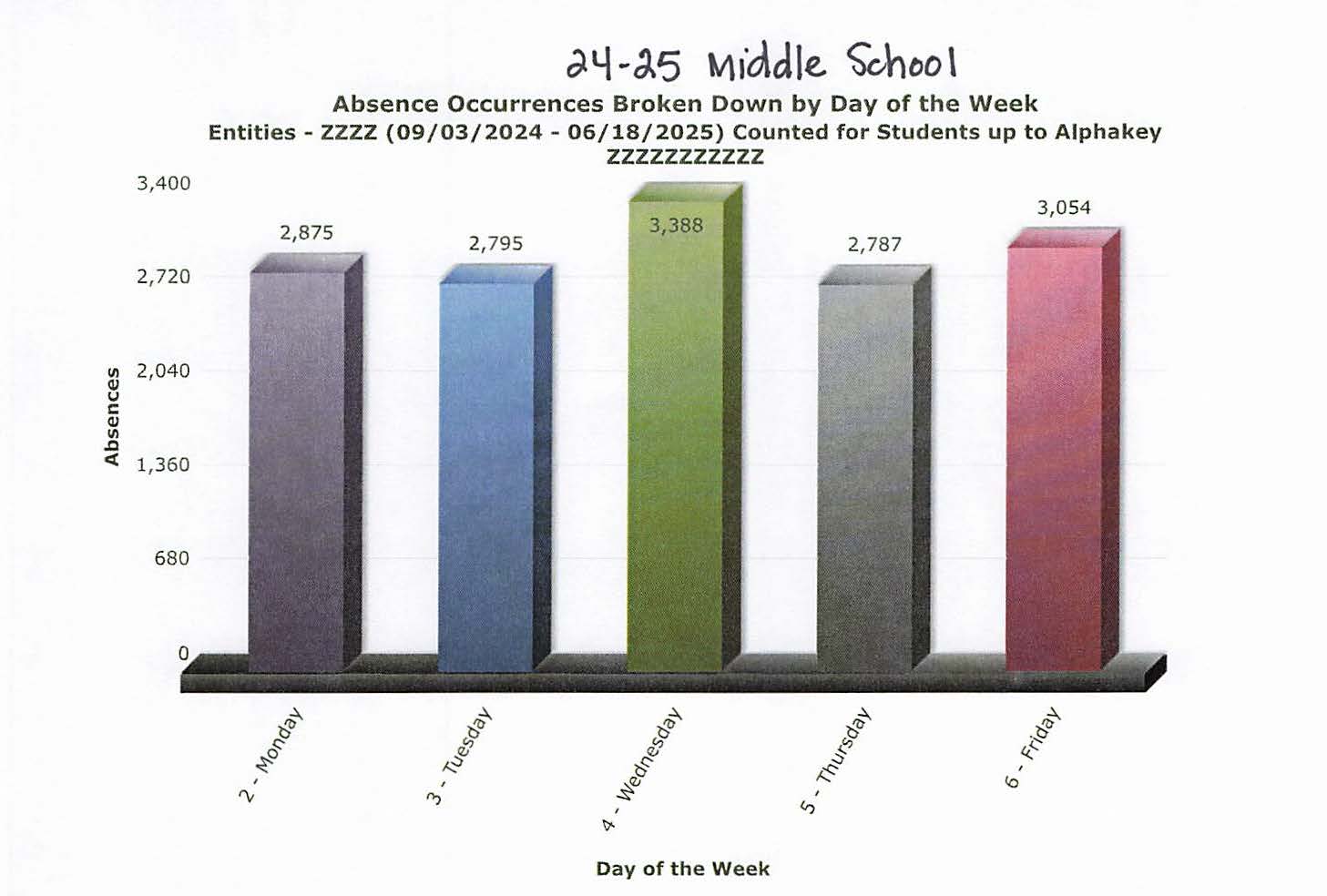
2024-2025 Middle School Student Absence Graph
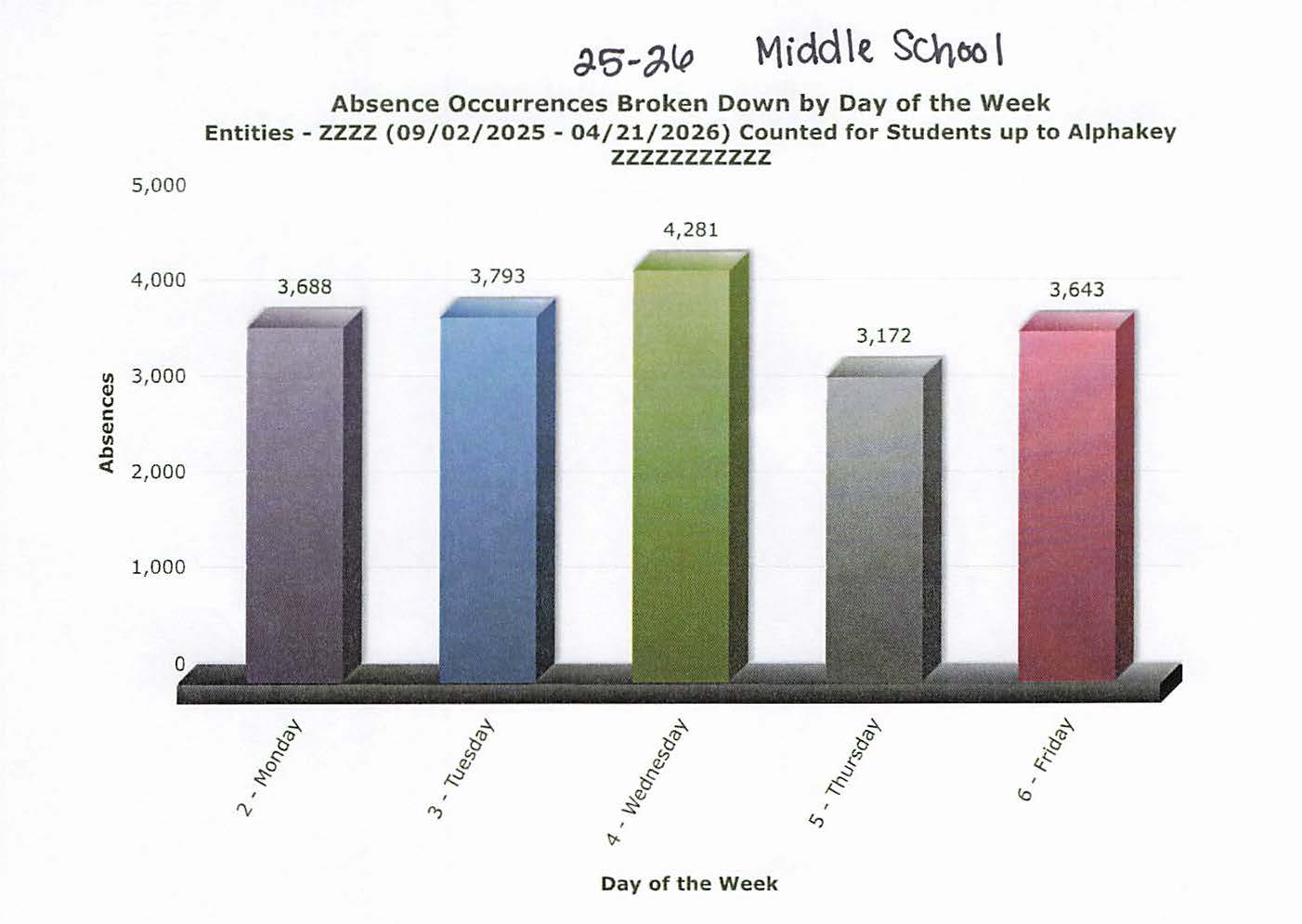
2025-2026 Middle School Student Absence Graph
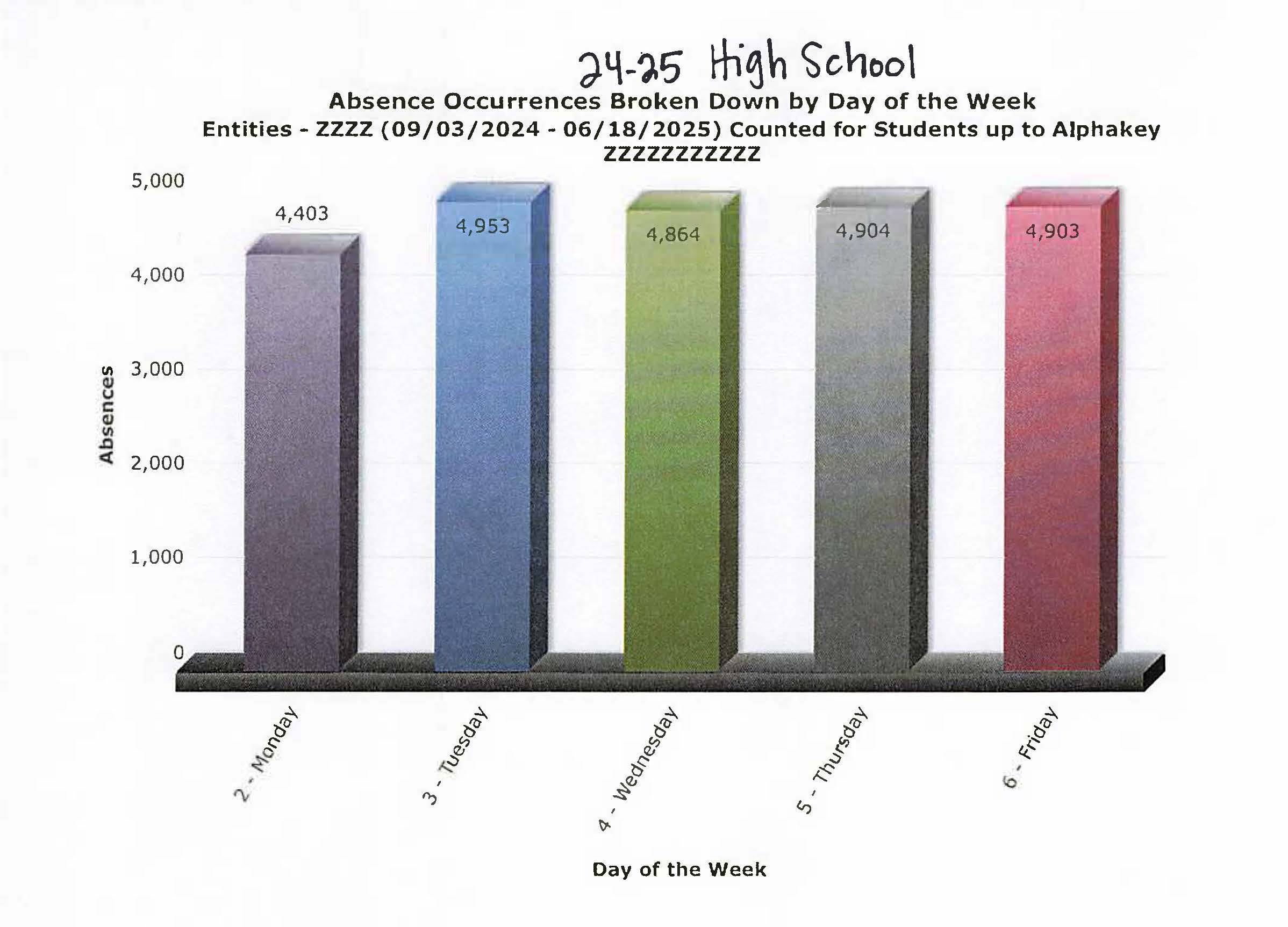
2024-2025 High School Student Absence Graph
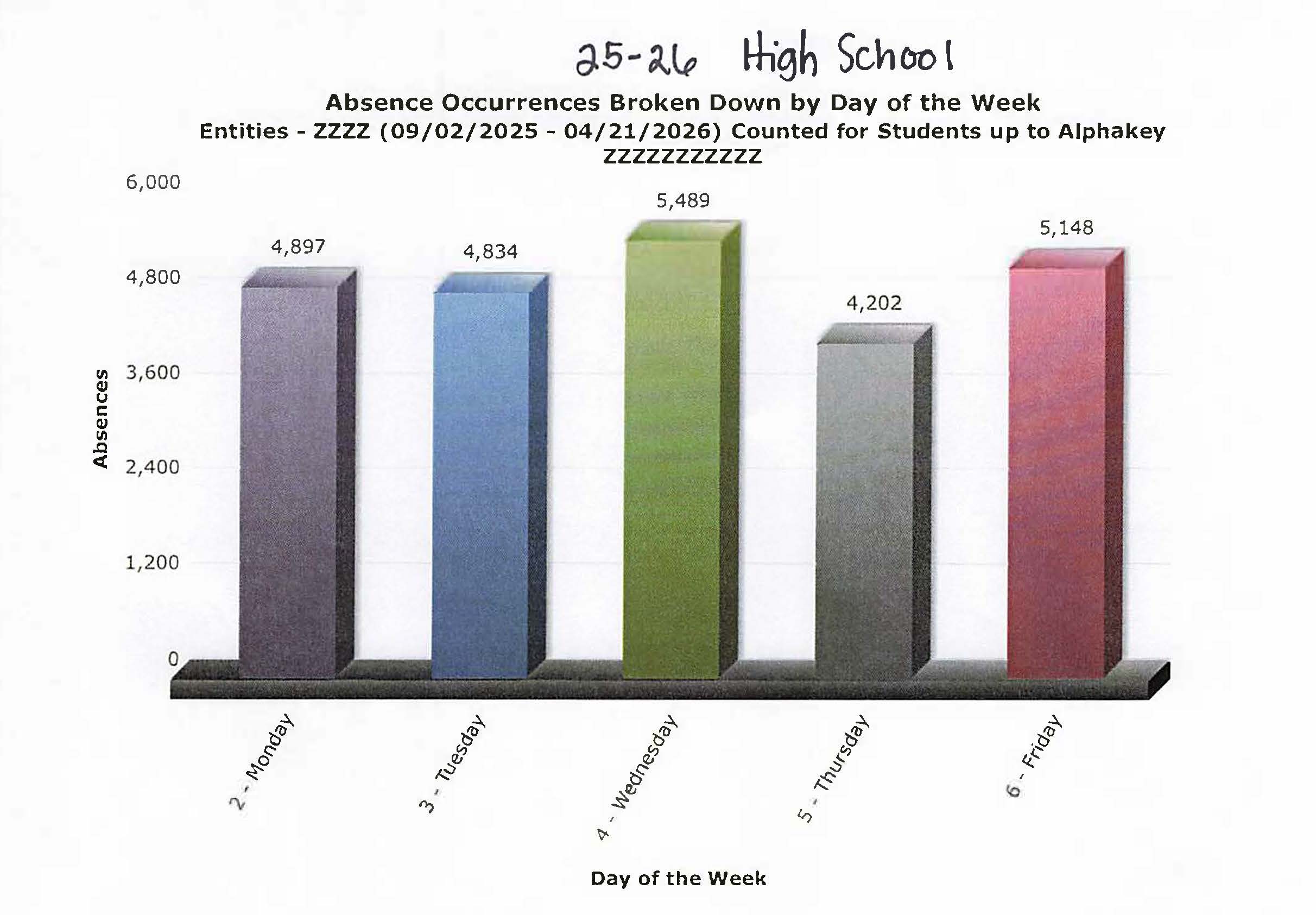
2025-2026 High School Student Absence Graph
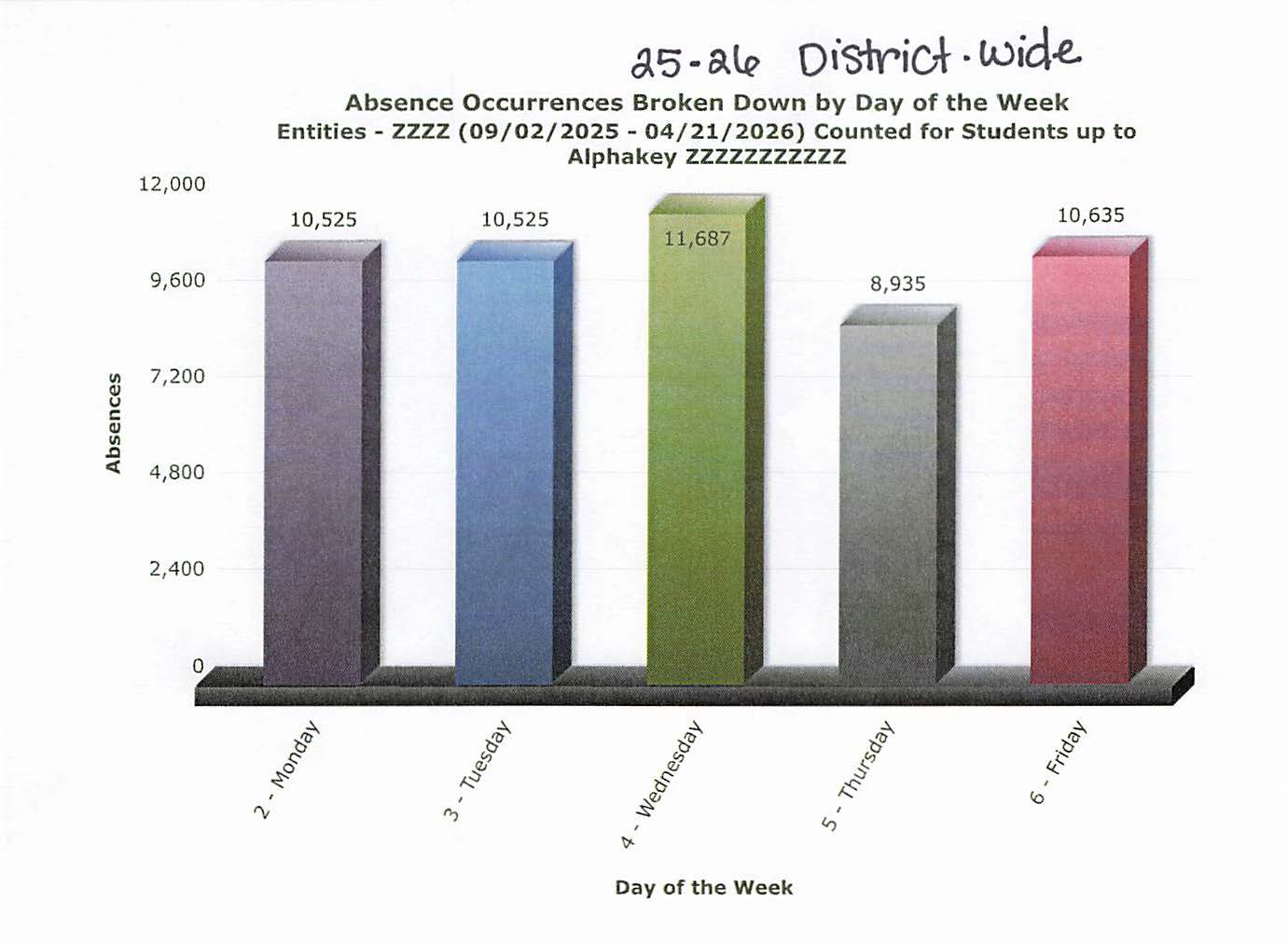
2025-2026 District Wide Student Absence Graph
4-Day School Week Survey Results
As the Onalaska School District explored the potential transition to a 4-day school week, we placed a strong emphasis on gathering and analyzing meaningful input from across our community. Feedback from staff, students, and families—along with attendance patterns and other key data points—played a central role in guiding this process.
The following charts and visual data summaries reflect what we learned through surveys, public engagement, and district data analysis. Together, they provide a transparent look at the factors that informed both the Board’s decision to apply for the state’s Economy and Efficiency Waiver and the selection of Friday as the proposed non-student day.
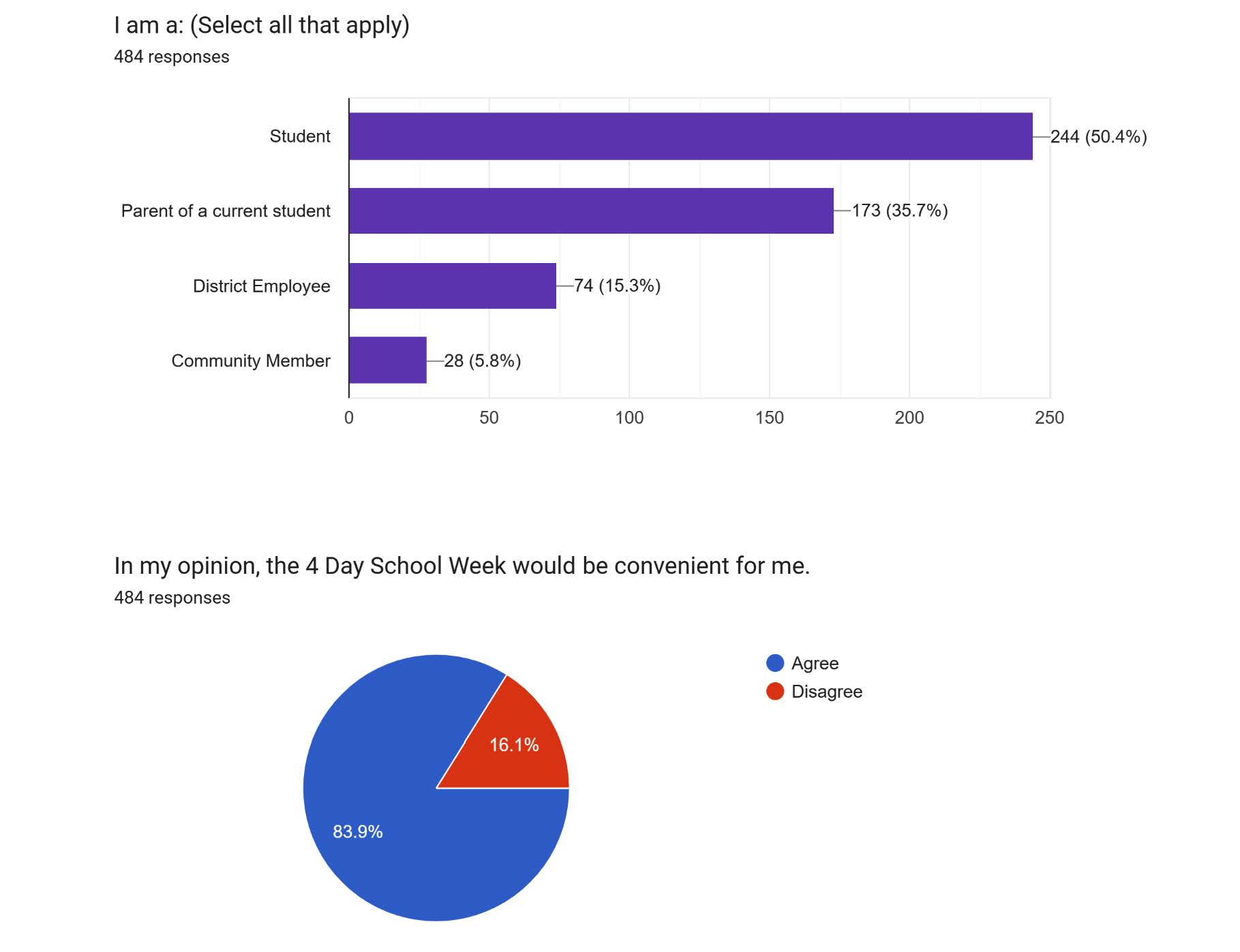
In the first graphic above, survey respondents were were asked to select the category they fell into, whether student, parent of a current student, District employee, or community member.
A total of 484 individuals responded to the survey, with breakdowns as follows:
I am a:
Students - 244 (50.4%)
Parents of a current student - 173 (35.75%)
District Employee - 74 (15.3%)
Community member - 28 (5.8%)
The second graphic above shows responses to the statement:
In my opinion, the 4 Day School Week would be convenient for me.
83.9% of respondents agreed the 4 day school week would be convenient
16.1% of respondents disagreed that the 4 day school week would be convenient
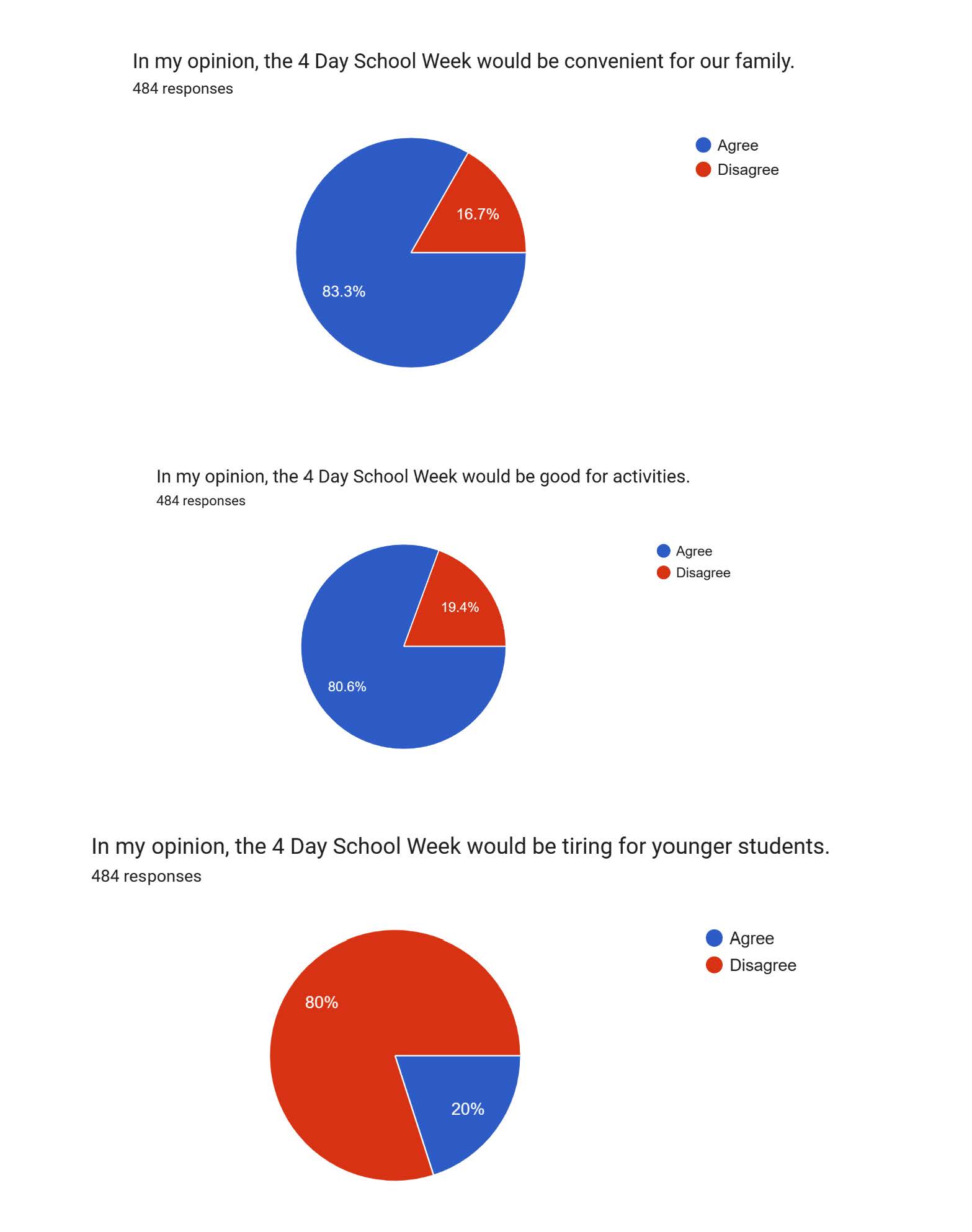
The three graphs above depict respondents answers to the following statements:
In my opinion, the 4 Day School Week would be convenient for our family.
83.9% of respondents agreed the 4 day school week would be convenient
16.1% of respondents disagreed that the 4 day school week would be convenient
In my opinion, the 4 Day School Week would be good for activities.
80.6% of respondents agreed the 4 day school week would be good for activities
19.4% of respondents disagreed that the 4 day school week would be good for activities
In my opinion, the 4 Day School Week would be tiring for younger students.
80% of respondents disagreed that the 4 day school week would be tiring for younger students
20% of respondents agreed the 4 day school week would be tiring for younger students
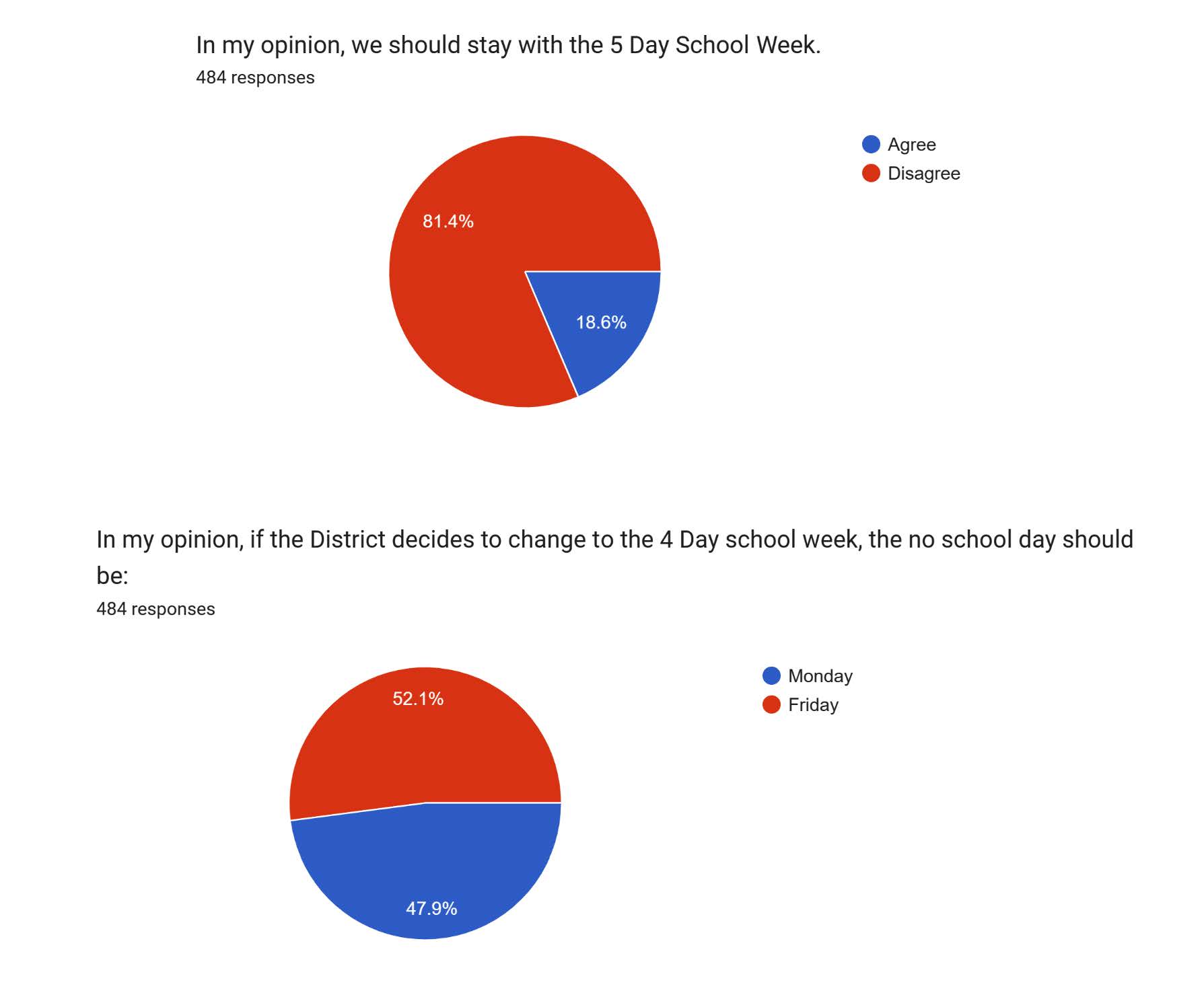
The two graphs above depict respondents answers to the following statements:
In my opinion, we should stay with the 5 Day School Week.
81.4% of respondents disagreed that we should stay with the 5 Day School Week
18.6% of respondents agreed that we should stay with the 5 Day School Week
In my opinion, if the District decides to change to the 4 Day School Week, the No School day should be:
52.1% Friday
47.9% Monday
When given an opportunity to provide written comments to three areas pertaining to the 4 Day School Week, respondents provided the following statements: Should the District Decide to change to the 4 Day School Week, what would be your biggest concern? What do you see as the single, biest advantage to a 4 Day School Week? What suggestions do you hae as to how the District should address your concern?
Most common concerns if we change to 4-day week:
Having to change work schedule
Childcare
Longer school days/change to bus schedules (early/late)
Access to food for kids on days off
Support staff hours/pay cut
Loss of instructional time for students with IEPs
Late practices
Shorter summer break
Reduction in learning time/reduction in academic growth
Missing out on staff collaboration time
Common Advantages:
Less school days, more rest time, time for appointments, work/school/life balance, etc.
Less burnout, more family time, younger kids with parents more
Staff and student morale/staff retention incentive
Reduced cost for transportation, reduced sub costs, budget savings
More prep time for staff
More time for activities (for students, families and staff)
Improved attendance (staff/students)
Get rid of early release Wednesdays
Less commuting for student drivers
Older kids can pursue employment
One day a week for staff to get caught up on work/projects
Suggestions:
Offer optional PD time to staff to make-up some of the lost hours
Food to send home with kids (backpack program)
Limit after school practice time
Schedule sports events on non-school days
Hire classified staff to provide daycare on the day off
Raise teacher pay
Offer enrichment for students
Offer daycare via staff (parents pay) or provide contacts for other options
Make changes based on community input/suggestions
More communication, send out email/Facebook with detailed info
No school = no school related activities
Provide early notice to families if the 4-day school week is approved
Running start has no school on Fridays, so no school on Friday works better
Don’t cut summer break short
In Closing:
This conversation is about sustainability, opportunity, and innovation. Our responsibility is to ensure students receive a high-quality education while we remain financially responsible and competitive in recruiting strong staff. A 4-day week is not about doing less, it is about examining whether we can do the same or better in a different way.